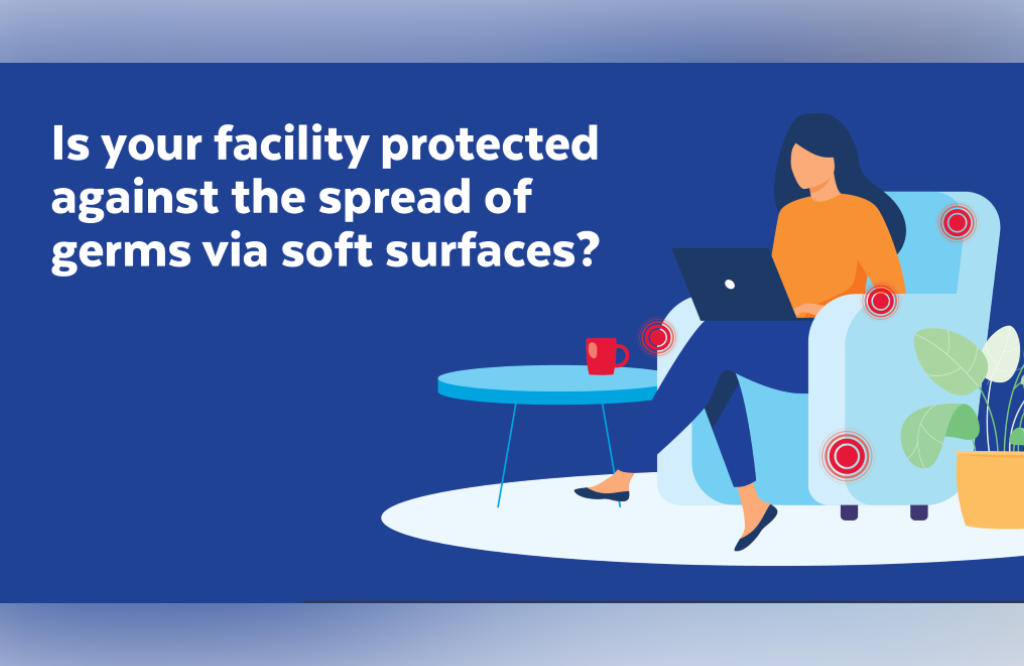
Do you know how soft surfaces such as furnishings, carpets, and personal fabrics can play a part in spreading illness-causing germs around your facility?
Soft surfaces are common in commercial environments, often prevalent on furnishings, drapes and rugs. They are particularly tough to disinfect, because these surfaces are porous, enabling germs to easily hide.
To find out more, we recently conducted a scientific study1 that revealed the ease with which soft surfaces can be contaminated when people with respiratory infections such as cold or flu cough or sneeze on them directly.
The research examined whether germs present in the upper respiratory tract of the ill participants were also the dominant microorganisms found on fabrics after coughing and sneezing on them.
Fabrics Can Play a Part in the Dreaded Spread
The results of our study revealed the following insights:
Individuals with upper respiratory infections can transfer these illness-causing germs to fabric:
- Thousands of organisms can be transferred to fabric from sick individuals in the process of coughing and sneezing on them directly
- Sneezing leads to a higher average level of virus transfer to fabric compared to coughing
- The germs responsible for flu and the common cold may be transferred relatively easily to fabrics
- The virus that causes common cold can survive on fabric for at least six hours
Contaminated fabrics can spread germs to people who come in contact with them:
- A potential risk exists for the transfer of germs to individuals that come into contact with fabric exposed to coughs and/or sneezes from people with upper respiratory infections
The Importance of a Holistic Approach to Hygiene
This study reinforces the importance of helping protect people from the spread of germs via soft surfaces, as a part of a holistic hygiene program. Cleaning and disinfection efforts are often focused solely on hard, non-porous surfaces, but our work reveals the importance of targeting soft surfaces in order to help protect both home and business environments.
A combination of good hand hygiene, hard surface disinfection and often forgotten soft surface disinfection can help prevent the spread of germs in facilities and help protect staff and customers from exposure to these germs.
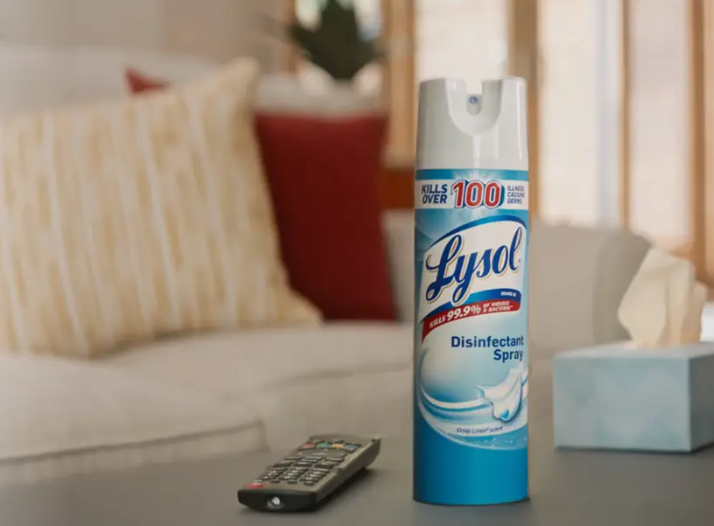
EPA-approved disinfectants such as Lysol® Disinfectant Spray are effective at killing germs on soft surfaces2, and can be used as a part of holistic facility hygiene to disinfect potential germ-harboring hotspots – both hard and soft.
- Evaluation of Respiratory Microorganism Shedding From Subjects With Presumed Upper Respiratory Infection During Coughing and Sneezing, October 2020-August 2023 ↩︎
- When used as directed ↩︎
This content was provided by Reckitt.